
Glaucoma
Glaucoma damages the optic nerve, usually because of pressure inside the eye — and it does it painlessly, often before you notice any change in your vision. It is treatable, and the earlier it is caught, the more sight there is to protect.
What glaucoma does
Glaucoma is a group of conditions in which the optic nerve cells at the back of the eye die. This is usually caused by excessive pressure inside the eye, exerted by a fluid called aqueous humor. Those optic nerve cells are what turn the light entering your eye into signals your brain can understand, so as they slowly die, vision is lost.
High pressure inside the eye is not always dangerous. In susceptible people, though, it begins to damage the optic nerve — and because glaucoma is painless, it can cause permanent damage long before you notice any difference in your sight. Glaucoma is treatable, but at this time there is no cure, so what is lost cannot be recovered.
How we test for it
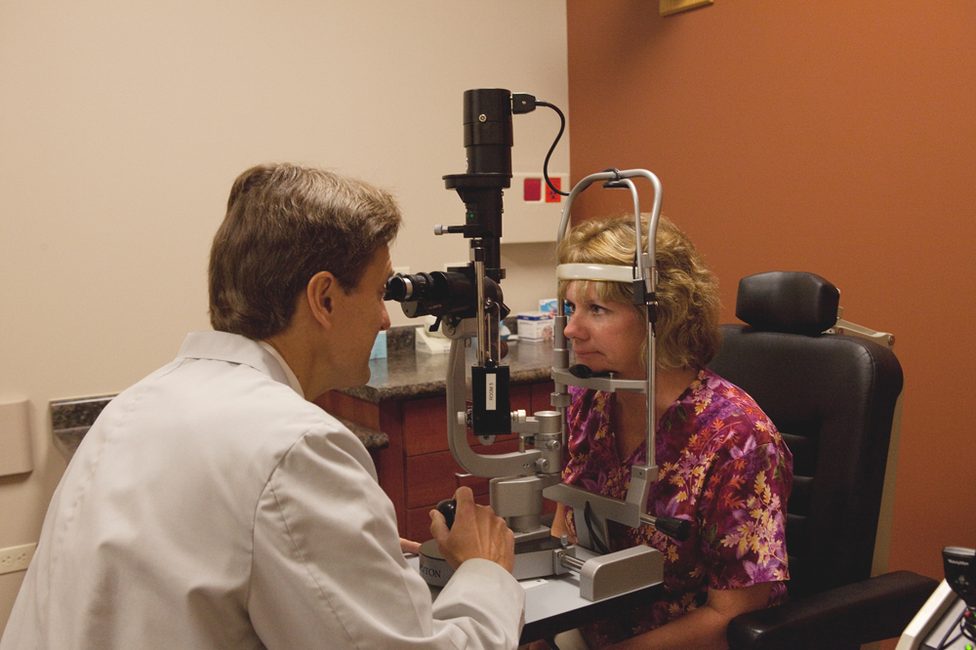
A thorough dilated examination is what finds glaucoma. It takes into account the pressure inside your eye, your family background, your visual field and the condition of the optic nerve itself, and together those let our doctors assess whether glaucoma is present.
Who is more likely to develop glaucoma
You are at higher risk if you:
- are related to someone with glaucoma
- have diabetes
- have high blood pressure
- are taking steroid medications
- are over the age of 50
- are of African descent
If any of these apply to you, an eye exam is worth booking even if your vision seems fine — that is exactly when glaucoma is easiest to treat. Call (815) 729-3777 to arrange one at either office.
Book a glaucoma exam
Glaucoma gives no warning, so testing is the only way to catch it early. We’ll find you a time.
Common questions
Are there any symptoms?
Usually not, and that is what makes glaucoma dangerous. It is a painless disease that can cause permanent damage before you ever notice a difference in your vision. By the time most people see a change, nerve cells have already been lost.
How is glaucoma diagnosed?
With a thorough dilated examination. We measure the pressure inside the eye, look at the condition of the optic nerve, test your visual field and take your family history into account. No single one of those tells the whole story, which is why the full exam matters.
Can glaucoma be cured?
No. Glaucoma is treatable, but at this time there is no cure, and vision already lost does not come back. Treatment is about protecting the sight you still have, which is why finding it early makes such a difference.
I have cataracts as well. Can both be treated?
Often, yes. Our surgeons can perform a goniotomy at the same time as cataract surgery for patients who have both conditions, treating them in a single procedure. Your surgeon will tell you whether that is an option for your eyes.